Tuesday, May 14, 2013

Make a Wish News Release


MEDIA ADVISORY


CELEBRATE HALEY’S WESTERN WISH ADVENTURE

 Missouri Wish Kid Receives All InclusiveTrip to

Montana Bunkhouses Working Ranch Vacation


WHAT:                 Join 10-year-old wish kid Haley of Missouri as she experiences her wish of going on a cattle drive at a working ranch in Montana. Haley, who is diagnosed with leukemia, will be receiving her wish courtesy of Make-A-Wish®.


WHEN:                 Wednesday, May 29 – Wednesday, June 5, 2013


WHERE:               Montana Bunkhouses Working Ranch Vacation

Kombol Working Ranch

                             295 Kombol Road

                                    Roundup, Mont. 59072


DETAILS:             Haley takes horseback riding lessons to help keep her mind away from her illness. Haley’s love for horses is apparent to anyone who knows her and she could not be happier to be riding horses during her stay at Kombol. Although the majority of Haley’s time will be spent riding horses or a horse-drawn wagon on a cattle drive, she will also be able to partake in nature walks and go wildlife spotting, among other ranch activities.


ABOUT:                Make-A-Wish ® Montana is a non-profit organization that grants wishes to children with life-threatening medical conditions to enrich the human experience with hope, strength and joy. The Foundation serves all 56 counties in Montana and granted its first wish in 1987. Since then, more than 400 wishes have come true with the help of more than 60 volunteers. For more information on how to refer children or to volunteer, please call Make-A-Wish at 1-877-574-9474 or visit its Web site at www.montana.wish.org.


CONTACT:           Heather Ohs, (406) 259-9848  @ Montana Make a Wish

Karen Searle, (406) 223-6101 @ Montana Bunkhouses Working Ranch Vacations LLC


Friday, October 19, 2012

Cooking in the west


Dear Roundup Participants,
   I can't be with you tonight because I am cooking for hunters in a tent in the Scapegoat Wilderness. Although I am somewhat concerned about being eaten by a grizzly bear in a cook tent that reeks of bacon grease, I am more concerned about making enough money at my extreme cooking job this week to buy a month's worth of Crystalyx supplement to help our cows get through this drought.
   As a ranchwife, my primary function is to supplement the income from the sale of our calves to keep the cattle healthy, the bills paid, and meet the annual land payment. Even though the ranches we operate now have been in our families since the early 1900's and both my husband and I are fourth generation Montana ranchers, we still have to work hard on and off the ranch to keep it solvent. 
   We started out 30 years ago with 25 cows, a couple jobs in town, some leased ground, and a dream to own our own ranch. Three factors made that dream a reality--the recession of the 80's that allowed us to buy a small place over across the river, inheritance of two nice places from family members that placed deathbed trust in us to hold on to the places they had created with sweat and perseverance, and the fact that we are too stubborn to admit that our ranching dream is sometimes more like a nightmare.
   For example, last year, a year of record rainfall, our summer pasture and our home place suffered more flood damage than the value of the calf crop. This year, we sold calves for record high prices right in the middle of a wildfire that burned up 1300 acres of our pasture, several miles of fence, and left a huge mess to clean up including 5 charred outbuildings. Fortunately, despite the drought and the fire, we will be able to hold on to our cows barring another bad hand dealt by Mother Nature. Being gamblers, we are going to double down and bet she deals us some aces in the form of normal moisture in the next year. Only God knows if it will rain, so the fate of our ranch is literally in His hands as it has been every year for the hundred plus years our families have been ranching in Montana.
   Ranchers don't get days off. They don't get to sleep in. Our family vacations consist of attending a bull sale in a neighboring state. Our investment is at risk from the economy, the weather, fluctuating prices, death loss from illness and predators, governmental regulations, radical environmental groups, noxious weeds, grasshoppers, wildfires, and floods to name just our top ten.
   Four generations of our family currently live on the ranch, and we want to pass it down to the fifth and sixth generation, our kids and grandkids. That will not be possible if the Death Tax is not reformed. If a bear eats me this week and that causes my husband to have a fatal heart attack, our children will have to sell the ranch to pay the inheritance tax, and that is just plain wrong since their ancestors will have paid over a hundred years of property tax on that property.
   I am not trying to evoke your sympathy, because we chose this profession, and we can walk away from it if we choose to do so. I am trying to explain our motivation as something other than the I word (insanity), so I will propose that we do this because we love the land, the livestock, and the lifestyle enough to lie awake at night trying to figure out how to hang on year after year and pass the ranch down to the next generation. Bottom line is that as a profession, ranching defies logical explanation. I cannot explain why this choice makes sense to us nor why our children want to follow in our footsteps, but the next time you eat a burger, I hope you will have a better understanding of the insane people who made that burger tasty, affordable, safe, healthy, and plentiful. Enjoy your ranch visit and know that I really do wish I could have been there!

Note from Susan Metcalf at the Lower Deer Creek Ranch: 
Every year, Bob and Susan Burch, who own the Hobble Diamond Ranch across the river from us, host an amazing Literary Arts Roundup at their ranch. They invite students from their other hometown of Philadelphia to join students from our area to stay at the ranch and explore fine arts with professional artists, writers, photographers, and actors. Their generosity and courage in hosting that many teenagers is astonishingly commendable.
    This year, Kathy Agnew, my former English teaching colleague, invited me to do a little presentation at the Roundup on what it is like to be a ranch wife, because suffice it to say that a visit to the Hobble Diamond is not an immersion into the reality of the average rancher's life. Unfortunately, I can't attend the Roundup, because I will be cooking in hunting camp. Nevertheless, I decided I would sit down and pen a few comments to the participants.


“Cooking in the West” routinely appears in the Western Ag Reporter, which covers the 14 northwestern states and is considered  the best read ag publication in the West.

Monday, April 23, 2012

Featured on Farm Stay U.S. website!

February 22, 2012 Interview

Karen Searle Owner/Manager of Montana Bunkhouses Working Ranch Vacations karen@montanabunkhouses.com


Question: Montana Bunkhouses is a group of 20+ working ranches that have teamed up to offer guests a great selection of authentic cowboy experiences, how and why did the group form?

Answer: Families who want to pass their ranch down to the next generation are under increasing economic pressure to sell out. I formed an agri-tourism cooperative, modeled after the European Farm Holiday program. The supplementary income each host ranch receives will hopefully help future generations to sustain their ranching way of life. We are able to offer a variety of authentic cowboy experiences, because that is exactly what we are, authentic. Ranching is a labor of love; we do not ranch because it is easy, we ranch because it is who we are. Montana Bunkhouses provides a gateway for others to share and understand our disappearing way of life.


Question: You (Karen) act as a matchmaker between guests and ranches, how do you know which ranch is best for a particular guest?

Answer
: I am a native Montanan with ranching roots and i guess you could say i am a travel coordinator. I act as a matchmaker for guests and ranches. I know these ranchers, personally, they are my friends and neighbors, and i understand what makes each of them unique. I devote myself to getting to know guests as well, not just as a potential customer, but as a friend. Developing a personal connection with our guests I am able to match them to a ranch not just based on their interests, but their personalities. My goal is to match you with a ranch that will give you an authentic ranching experience, adding emphasis to the areas you find most interesting, and introduce you to people who will become "family" during your visit.


Question: There's a cluster of ranches concentrated east of Bozeman and west of Billings, What is special about that area?

Answer: The idea for Montana Bunkhouses Working Ranch Vacations started where i live in southwestern Montana, and the participation ranches now stretch to the border -- each in dramatic landscapes -- across the entire state. It is a great benefit for our guests that the area with the highest concentration of ranches is within the distance of a day's excursion to Yellowstone National Park. With our working ranch vacations, everything on-ranch is included: comfortable lodging, hearty family style meals, and seasonal ranch activities. Rates vary from $ 1500 to $1900 per week depending on the ranch and the hands on experiences they offer.


Question:What sets Montana Ranch Vacations apart for ranch vacations elsewhere in the U.S.?

Answer
: “Saddle Up” and experience a part of the Old West that still exists. We love sharing the ranching way of life and what comes with it. With over twenty Montana Cattle Ranches hosting guests, we offer a wide range of choices specializing in unique agri-tourism vacation opportunities on a personalized basis. Working ranch vacations offer more than just head to tail horseback riding. Guests participate in seasonal ranch activities while learning about conservation practices and sustainable ranching in the Rocky Mountains. It is traditional for ranch families to get together during brandings or roundups or cattle drives and they welcome you to join them. You will enjoy the camaraderie and appreciate the skill involved in the roping and wrangling. Springtime in the Rockies brings the perfect combination of nature and nurture. During calving and lambing you can make a difference, watch expecting mothers, read the weather, and lend a hand in preserving new life. Something vital fills each and every day.


Question: What is your (Karen's) background? How did you end up with such an unusual and fascinating job?

Answer:
Ranching is in my blood. I grew up on a cattle and sheep ranch in southwestern Montana, and am well-versed in the challenges of the family farm. I am the galvanizing force behind the agri-tourism cooperative, and describe myself as a matchmaker, pairing ranch families and travelers. I was credited by a former director of Cooperation Works, a national center for cooperative business development, for having put together the first agri-tourism cooperative of cattle ranches in the United States. The co-op was formed after I was selected as a representative to the 2002 World Congress on Rural Women and Rural Issues in Spain. I modeled it along the lines of the European Farm Holiday program. I see agri-tourism as a way to help preserve family ranches and to narrow the divide between ranch and city dwellers on land use, and wildlife issues. Those objectives have put Montana Bunkhouses on the forefront of a trend in the travel industry labeled “geo-tourism.” Travel that sustains or enhances the character of a place, helping to preserve its heritage, habitats and scenic beauty.


Question: Is there a 'typical guest' that you work with? What kind of folks crave a Montana working ranch vacation, and what are they looking to do during their stay?

Answer:
Why do guests come? Montana is a place where myth has long been in partnership with reality. The kinds of folks who find me on the internet are searching for “working ranch vacations.” They are not interested in simply traveling to another destination…they are seeking a life changing experience. Whether they are looking to connect with their roots, or reconnect with their family members, or establish a connection with our ranching way of life…it is all here. We offer the opportunity for them to share the ranching way of life with people who are tied by birth or choice to a part of America that just might prove to be the country’s soul!


Question: Your Group has gotten a lot of good press! Do you have a favorite article (or two) that you want to share with our readers?

Answer:
Yes, we have gotten a lot of good press as you can see if you go to our “IN THE NEWS” website link: http://www.montanaworkingranches.com/news.html . The USDA/Rural Developments folks told our story in their national “Rural Cooperatives” magazine. We’ve been featured in newspapers in places a far flung as New York, Chicago, and Sidney, Australia. Respected travel magazines including Condé Nast Traveler and the Sunset magazine have celebrated our unique vacations….. as well as journalists in China, Taiwan, Japan, Italy and the United Kingdom. But the one that I’m the most proud of – my favorite, hands down!— is being selected for the National Geographic GeoTourism MapGuide of the Greater Yellowstone area. Please encourage your readers to go to my website www.montanaworkingranches.com to order their free copy. They will want to have this map in their back pocket when they visit Montana. We are the only Montana ranch-vacations to have met National Geographic’s criteria for authenticity of experience, culture and heritage. We're proud of that.


Question: What has changed for the ranches since your group formed? What changes do you foresee in the future?

Answer:
Change is measured in generations in Montana and our agri-tourism cooperative is just starting its second decade so we can only speculate what the longer term impact will be for the ranchers down the line. Already the diversified income from agri-tourism has provided everything from money to remodel a kitchen right on down to the money necessary to make the next ranch loan payment. In some cases it means the difference on whether the ranch family’s son or daughter can return home so they can carry the ranching traditions on to the next generation. But the benefit is not just measured in dollars and cents. We enjoy sharing our way of life. It jogs us off-center so we don’t simply take for granted what we’ve been born to do because we see our ranching world through our guest’s eyes and it brings us joy.


http://www.farmstayus.com/farm/Montana/Montana_Bunkhouses_Working_Ranches

Thursday, September 29, 2011

Connecting Montana and the World


“CONNECTING MONTANA and the WORLD
Through Global Education & Exchanges”

MONTANA CENTER FOR INTERNATIONAL VISITORS
Extends AFFLIATE STATUS to recognize
MONTANA BUNKHOUSES WORKING RANCH VACATIONS LLC
And
KAREN SEARLE

Citizen diplomacy is the concept that, in a vibrant democracy, the individual citizen has the right - even the responsibility to help shape U.S. foreign relations.


MONTANA CENTER FOR INTERNATIONAL VISITORS (MCIV) staff arrange meetings between international visitors and their professional counterparts to discuss common interests and to share ideals. These appointments often lead to continued contact overseas with mutual benefits. Through participation in person-to-person exchanges, Montanans across the state open their homes, offices, schools, and businesses to colleagues from abroad adding a welcomed touch of Montana hospitality to guest's experience.

MCIV has their headquarters in Bozeman, Montana. The annual MCIV President’s Dinner was held Sunday, September 18th, 2011. Among the selected community members recognized for their participation included:

MONTANA BUNKHOUSES’ for contributions to Citizen Diplomacy in Montana:
· Karen Searle was a speaker at the 2010 NCIV Regional Conference, “Working Ranch Vacations & the Emerging Geotourism Trend”
· Azerbaijan delegates met with Karen Searle to consider Montana Bunkhouses’ cooperative agri-tourism model and considered its application in their home country.
· Tibetan delegates were hosted by Karen Searle and the Barron Ranch. Delegates enjoyed ranch hospitality and an introduction to sheep and cattle ranching in Montana. The visitors found common ground in the lambing shed, checking for newborn calves, and enjoyed the camaraderie of shared meals.
· “Agri-tourism & Biodiversity Conservation” was the theme for the multi-regional project that featured Karen Searle as a speaker. The group included delegates from Brazil, Croatia, France, Ghana, Grenada, Israel, Philippines, Zambia
· This fall Montana Bunkhouses and the Padlock Ranch will host French delegates with emphasis on beef cattle management, specifically genetics and nutrition.
Montana Center for International Visitors (MCIV) is an affiliate of the National Council for International Visitors (NCIV) based in Washington DC. They are one of 92 U.S. non-profit centers dedicated to promoting global understanding through citizen diplomacy. One of the ways they try to foster global understanding is by facilitating the International Visitor Leadership Program sponsored by the U.S. Department of State. Montana hosts approximately 150 international leaders through this program each year.


For more information go to http://www.montanaciv.org/


Thursday, September 15, 2011

Montana Bunkhouses in the Sydney Morning Herald


Beneath the big sky
September 3, 2011
Home on the range ... guests can participate in the working life of ranches. Photo: Getty Images
Lance Richardson saddles up and joins 'dude cowboys' on a working ranch in wild Montana.
The clouds are low with rain but we've gone out riding anyway. While the horses struggle up stony foothills, white-tailed deer raise their heads in alarm and scatter through the sagebrush. There are few birds about; the paralysing beauty of the Montana wilderness creates an impression of unnatural quiet. The only sounds I recall are hooves in mud, snorting animals and the roar of a creek swollen with snow melt.
After a long time we reach a bluff, its steep edge overlooking a wide valley of patchwork fields punctuated by red barns and lines of Douglas firs. I ask Mike Leffingwell, the ranch owner, if the snowy peaks in the distance are those known as the Crazy Mountains. Leffingwell pulls up his horse beside my palomino and nods. The "Crazies" are something of a local legend, he'd told me earlier, spittoon wedged between his legs as he drove the pickup one-handed down an unsealed road.
Advertisement: Story continues below
As white settlers moved westward across the US, the native inhabitants were forced from their homes and often killed. One woman, after watching her family die, climbed up among the mountains and went insane. On a violent day the wind carries the sound of her endless wailing across the valleys.
Told anywhere else, such a story would be shrugged off as a fantasy of the "wild west". Here, however, Leffingwell recites it without comment. Here, where mountain men once traced Indian trails to lead Conestoga wagons to safety, where wolves still prowl right past the front door, strange tales are part of a strange land. In some parts, the wild west was only a hundred years ago, if it ended at all.
To reach G Bar M Ranch, Leffingwell's working property just outside the town of Clyde Park near the Yellowstone River, I drive down a long road through a twisting valley, then into a field filled with yellow daisies. There are about a dozen buildings at the end, but the heart of the ranch is an impressive structure of stacked, burnished logs known affectionately as "the lodge". Maria, Leffingwell's wife, "skinned" many of the logs herself, a herculean effort that leaves her grimacing with phantom pains whenever it's recalled. Walking up its steps I notice antlers collected on the front porch (they were shed naturally and collected on the property) and, just inside, a bear skin draped behind a mounted bald eagle. Beneath the bird's glassy stare are saddles, faded photographs and books on western women and western poetry. Everything is assembled around an enormous fireplace.
This being a working ranch, I have come here, as many people do, to work. Though G Bar M Ranch accepts guests, it does so with an understanding that they will participate in the operating requirements of a Montana farm.
Greetings are therefore brief. There's a hasty tour of my room, which features an American flag hung above the quilted bed, before my short life as something approximating a makeshift cowboy begins.
It is immediately clear that the presiding authority here is Leffingwell, a ginger-moustached man who sits at the head of the table and commands his household with a disarming soft-spokenness. Whenever he asks somebody to milk a goat, for example, they do so not because he is the "boss", but because he is the sort of person you want to impress. After the meal, when local students exit the lodge to resume a class in shoeing horses, the remaining members (including me) turn to watch him insert tobacco behind his bottom lip and talk through a list of chores: a leak in the homestead, a tractor that must be lifted onto a truck, things to patch up, salt-lick for the cattle.
Sam, a cowhand for the summer, is sent to mend equipment. Ariane, from Paris, remains behind to help Maria. Only two hours after arriving, I find myself riding shotgun to a neighbouring property for a lesson in the art of inseminating cattle. Thankfully, it's a visual demonstration: my participation is limited to chasing heifers in a circle and holding open the holding shed door so Leffingwell can see what he's doing and the cows, each taking their turn, cannot.
Guest ranches are a common sight across Montana and the surrounding states. Indeed, their popularity seems to be increasing, with ranch rodeos back in vogue with colourful events such as branding and wild-cow milking. Since the railroad came through these parts in the late 19th century, homesteaders have opened up their homes to visitors and, in many cases, romanticising "dudes" - city dwellers with a penchant for fantasising the American west. While history books record, over time, a growing ambivalence on the part of westerners towards their eastern compatriots, the Montana homesteaders have nevertheless been more than happy to take their money.
Many of the dude ranches that exist today are holiday properties with carefully trimmed tennis courts alongside horses and fly-fishing expeditions. What Leffingwell offers is slightly different. There are no tennis courts, massages or internet reception.
G Bar M Ranch is also motivated by the faded idea that gave rise to guest ranches in the first place: a desire to celebrate and preserve a culture in peril. "We're trying to really teach some of the sustainable agriculture and livestock handling skills that are not lost, but becoming extinct," Leffingwell says.
To this end he intends to co-operate with a local movement of ranchers who have voluntarily added a clause to their deeds, prohibiting any major changes to property in the future. Its purpose is to safeguard the open spaces (often called the "big sky"), as well as the cultural and aesthetic heritage of Montana. Pull up a chair after dinner and ask him about his history and you'll realise just how much Leffingwell actually has worth protecting.
The night I do so, the clouds have broken into rain and the temperature has dropped enough to warrant a fire. Tobacco at the ready, Leffingwell begins an engrossing tale that starts with his great-grandfather George in 1898 buying a ticket on the railroad as far as he could go. Finding himself at the terminus point of Big Timber, Montana, George crawled off the train and got a job herding sheep. "After working for a while, he more or less saved up enough money to explore out. He came into this valley in about 1901, then went ahead and bought a homestead. And he set up camp and began building a ranch."
What follows is a labyrinthine saga involving railroad magnates, "saddle tramps", blind Braille teachers and Indian burial sites. It finishes, for now, with Mary Leffingwell, aged 15, the fifth generation on the land.
Knowing this story makes me notice small, time-worn details I'd previously overlooked. In the morning, I help distribute baled hay to the horses on the neighbouring property. When I return it's to a ringing bell, calling everyone to supper like the formal start of an old and cherished ritual. On my last day I'm asked to ring the bell myself. Sam, the cowhand, in a wide-eyed whisper that is only partly ironic, calls it "an honour". Sam also takes me fishing at the swollen creek, overturning rocks and logs in search of worms to use as bait. It's a gesture that casts us back to a world before digital distractions, further cementing my impression of having fallen out of time here.
Though everything from cattle dogs to the elk sausages on the table contribute to the ranch "experience", the daily focus is on the horses. Guests average four to seven hours a day in the saddle. They can, if they wish, tend to the upkeep of their own horse for the duration of a stay.
Leffingwell also offers dedicated classes in horsemanship. While I ride out several times over a few days, my first time, to check on cattle grazing alone in the mountains, is also the most memorable. After grooming and fitting a bridle, Leffingwell leads my horse out of the barn and into a muddy clearing, where more than two dozen other horses watch me mount and ride through the surging overspill from the nearby creek.
Later, recognising my struggle to fully command the horse, a fellow rider pulls up beside me and says in that vague way of the cowboy: "There is a void between a man and a horse. That void will be filled, either by the man or by the horse. Do you understand what I'm saying to you?"
Following our sighting of the Crazy Mountains, we turn into a series of high hollows, Leffingwell casting ahead in search of the cattle. After what seems, with increasing suspense, destined to end in failure, we come across them sitting calmly in a field.
Then the cattle dogs shoot off, unhinged by excitement. Leffingwell scowls. Their sudden action has startled some pregnant horses resting in the herd. A foal flees over the crest of the hill, followed by three mares.
Though we attempt to follow them through several stony passes, there's little chance of catching them today. Resigned, the group heads towards home, pausing on the final hill to observe the ranch in its quiet corner of the world.
Right then, as someone turns around and catches sight of the renegade horses watching us from a distant ridge, I'm reminded of something else Leffingwell had told me the night before.
"To survive as a horse here you have to handle well enough that I can crawl onto you and go and do a day's work whenever I have to," he'd said. "But I feel about them as somebody feels about their favourite car. And get them out on those hills . . . it's pretty darn neat."
All creatures great and small
MONTANA is known as a place of horse whisperers, but there's a great deal more worth seeing in the land of the "big sky".
For budding paleontologists, a statewide Dinosaur Trail takes in the breadth of natural history hidden beneath the prairies and badlands. This is the home of T-Rex, after all. A highlight is Makoshika State Park and Dinosaur Museum in Glendive; it's also possible to join dinosaur digs in Custer County. See mtdinotrail.org, custer.visitmt.com.
Montana has an unusually large number of "blue ribbon" trout rivers, meaning recreational fisheries of extremely high quality (see visitmt.com for a full list). Fly fishing is an obsession here and outfitters are available across the state to get you equipped.
For a different approach to the water, consider a float trip down the Yellowstone River, which varies from calm to Class IV white water. A good place to start is Gardiner, just outside the north entrance to Yellowstone National Park (three of the park's five entrances are in Montana); see wildwestrafting.com.
The Great Montana Sheep Drive started in the town of Reed Point as a joke. Now it attracts thousands of people who come to see woolies driven down the main street for Labor Day. This year's drive happens this weekend.
Lance Richardson travelled courtesy of Montana Tourism and V Australia.
FAST FACTS
Getting there
V Australia has a fare to Montana for about $1720 low-season return from Sydney and Melbourne including tax. You fly to Los Angeles (about 14 hr non-stop), then Delta Airlines to Salt Lake City (2hr), then to Bozeman (80min). G Bar M Ranch is about an hour's drive from the airport, through the town of Clyde Park. Australians must apply for travel authorisation before departure at https://esta.cbp.dhs.gov.
Working there
Though G Bar M Ranch takes direct bookings (gbarm.com), a better option is to go through Montana Bunkhouses. This self-described "matchmaking service" draws from a pool of 20 working ranches, personalising each experience to an individual's abilities and interests. Prices range from $US200-$US350 ($189-$330) a day. Phone +1 406 222 6101, see montanaworkingranches.com.
More information
See visitmt.com.
Read more: http://www.smh.com.au/travel/beneath-the-big-sky-20110901-1jnjk.html#ixzz1WqBTwcFB
Friday, August 12, 2011

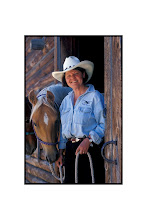
"Padlock Pat", (Also known as Pat Gleeson, from Australia) was a guest at the Padlock Ranch and he writes:


8/12/11

I have recently returned from a life experience that will stay within me forever. I "rode for the brand" at The Padlock Ranch. If you really want the experience of being on a working ranch, you cannot go past the Padlock. Jesse Ballantyne is Head Wrangler and Cow Boss. He is one very experienced horseman and willingly shares his knowledge.

Together with Jesse’s daughter Hannah, Les Nunn (Guest Relations Manager) and Isaac and Steve Johnson, I was riding with the real deal and witnessed horsepeople working a new horse to get it seasoned, or sharpening up an older horse and giving it a job gathering cattle. The terrain and scenery whilst out riding and moving cow/calf pairs is just spectacular and at times unexpected. Some of those hills are steep, with deep ravines below.


The accommodation at the Wolf Mountain Lodge is 6 star while still giving you a sense that “this is home”. Coupled with the friendly welcome and wonderful home cooked meals by Kristen and Steve Johnson it really does feel so much like being home. Kristen serves up some of the best and most nutritious meals you could ask for, plus her jerky is the best and really hits the spot when out in the saddle for sometimes up to 7 hours.

You can expect to spend plenty of time in the saddle with a good working horse beneath you. Jesse and crew are always happy to provide pointers regarding horsemanship, working and reading cattle and, in down time, you can even sharpen your roping skills.

The Padlock Ranch is in the top 6 largest ranches in the U.S.A and continues a legacy of land stewardship, plus cowboy ethics and principles. If you have ever wondered what it is like to be out cowboying or even wondered if it still really exists, come to the Padlock and experience an amazing world. You will see its not just a job, but a way of being.


As an Aussie who has read about it all in books, and through Western Horseman, to be able to participate and experience a real working ranch was just heaven. I would ride for the Padlock brand any day and I feel privileged to have ridden with some amazing and experienced people. So don’t dream about it anymore, book yourself a week at the Padlock Ranch - you will never regret it.