Thursday, September 29, 2011

Connecting Montana and the World


“CONNECTING MONTANA and the WORLD
Through Global Education & Exchanges”

MONTANA CENTER FOR INTERNATIONAL VISITORS
Extends AFFLIATE STATUS to recognize
MONTANA BUNKHOUSES WORKING RANCH VACATIONS LLC
And
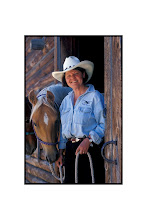
KAREN SEARLE

Citizen diplomacy is the concept that, in a vibrant democracy, the individual citizen has the right - even the responsibility to help shape U.S. foreign relations.


MONTANA CENTER FOR INTERNATIONAL VISITORS (MCIV) staff arrange meetings between international visitors and their professional counterparts to discuss common interests and to share ideals. These appointments often lead to continued contact overseas with mutual benefits. Through participation in person-to-person exchanges, Montanans across the state open their homes, offices, schools, and businesses to colleagues from abroad adding a welcomed touch of Montana hospitality to guest's experience.

MCIV has their headquarters in Bozeman, Montana. The annual MCIV President’s Dinner was held Sunday, September 18th, 2011. Among the selected community members recognized for their participation included:

MONTANA BUNKHOUSES’ for contributions to Citizen Diplomacy in Montana:
· Karen Searle was a speaker at the 2010 NCIV Regional Conference, “Working Ranch Vacations & the Emerging Geotourism Trend”
· Azerbaijan delegates met with Karen Searle to consider Montana Bunkhouses’ cooperative agri-tourism model and considered its application in their home country.
· Tibetan delegates were hosted by Karen Searle and the Barron Ranch. Delegates enjoyed ranch hospitality and an introduction to sheep and cattle ranching in Montana. The visitors found common ground in the lambing shed, checking for newborn calves, and enjoyed the camaraderie of shared meals.
· “Agri-tourism & Biodiversity Conservation” was the theme for the multi-regional project that featured Karen Searle as a speaker. The group included delegates from Brazil, Croatia, France, Ghana, Grenada, Israel, Philippines, Zambia
· This fall Montana Bunkhouses and the Padlock Ranch will host French delegates with emphasis on beef cattle management, specifically genetics and nutrition.
Montana Center for International Visitors (MCIV) is an affiliate of the National Council for International Visitors (NCIV) based in Washington DC. They are one of 92 U.S. non-profit centers dedicated to promoting global understanding through citizen diplomacy. One of the ways they try to foster global understanding is by facilitating the International Visitor Leadership Program sponsored by the U.S. Department of State. Montana hosts approximately 150 international leaders through this program each year.


For more information go to http://www.montanaciv.org/


Thursday, September 15, 2011

Montana Bunkhouses in the Sydney Morning Herald


Beneath the big sky
September 3, 2011
Home on the range ... guests can participate in the working life of ranches. Photo: Getty Images
Lance Richardson saddles up and joins 'dude cowboys' on a working ranch in wild Montana.
The clouds are low with rain but we've gone out riding anyway. While the horses struggle up stony foothills, white-tailed deer raise their heads in alarm and scatter through the sagebrush. There are few birds about; the paralysing beauty of the Montana wilderness creates an impression of unnatural quiet. The only sounds I recall are hooves in mud, snorting animals and the roar of a creek swollen with snow melt.
After a long time we reach a bluff, its steep edge overlooking a wide valley of patchwork fields punctuated by red barns and lines of Douglas firs. I ask Mike Leffingwell, the ranch owner, if the snowy peaks in the distance are those known as the Crazy Mountains. Leffingwell pulls up his horse beside my palomino and nods. The "Crazies" are something of a local legend, he'd told me earlier, spittoon wedged between his legs as he drove the pickup one-handed down an unsealed road.
Advertisement: Story continues below
As white settlers moved westward across the US, the native inhabitants were forced from their homes and often killed. One woman, after watching her family die, climbed up among the mountains and went insane. On a violent day the wind carries the sound of her endless wailing across the valleys.
Told anywhere else, such a story would be shrugged off as a fantasy of the "wild west". Here, however, Leffingwell recites it without comment. Here, where mountain men once traced Indian trails to lead Conestoga wagons to safety, where wolves still prowl right past the front door, strange tales are part of a strange land. In some parts, the wild west was only a hundred years ago, if it ended at all.
To reach G Bar M Ranch, Leffingwell's working property just outside the town of Clyde Park near the Yellowstone River, I drive down a long road through a twisting valley, then into a field filled with yellow daisies. There are about a dozen buildings at the end, but the heart of the ranch is an impressive structure of stacked, burnished logs known affectionately as "the lodge". Maria, Leffingwell's wife, "skinned" many of the logs herself, a herculean effort that leaves her grimacing with phantom pains whenever it's recalled. Walking up its steps I notice antlers collected on the front porch (they were shed naturally and collected on the property) and, just inside, a bear skin draped behind a mounted bald eagle. Beneath the bird's glassy stare are saddles, faded photographs and books on western women and western poetry. Everything is assembled around an enormous fireplace.
This being a working ranch, I have come here, as many people do, to work. Though G Bar M Ranch accepts guests, it does so with an understanding that they will participate in the operating requirements of a Montana farm.
Greetings are therefore brief. There's a hasty tour of my room, which features an American flag hung above the quilted bed, before my short life as something approximating a makeshift cowboy begins.
It is immediately clear that the presiding authority here is Leffingwell, a ginger-moustached man who sits at the head of the table and commands his household with a disarming soft-spokenness. Whenever he asks somebody to milk a goat, for example, they do so not because he is the "boss", but because he is the sort of person you want to impress. After the meal, when local students exit the lodge to resume a class in shoeing horses, the remaining members (including me) turn to watch him insert tobacco behind his bottom lip and talk through a list of chores: a leak in the homestead, a tractor that must be lifted onto a truck, things to patch up, salt-lick for the cattle.
Sam, a cowhand for the summer, is sent to mend equipment. Ariane, from Paris, remains behind to help Maria. Only two hours after arriving, I find myself riding shotgun to a neighbouring property for a lesson in the art of inseminating cattle. Thankfully, it's a visual demonstration: my participation is limited to chasing heifers in a circle and holding open the holding shed door so Leffingwell can see what he's doing and the cows, each taking their turn, cannot.
Guest ranches are a common sight across Montana and the surrounding states. Indeed, their popularity seems to be increasing, with ranch rodeos back in vogue with colourful events such as branding and wild-cow milking. Since the railroad came through these parts in the late 19th century, homesteaders have opened up their homes to visitors and, in many cases, romanticising "dudes" - city dwellers with a penchant for fantasising the American west. While history books record, over time, a growing ambivalence on the part of westerners towards their eastern compatriots, the Montana homesteaders have nevertheless been more than happy to take their money.
Many of the dude ranches that exist today are holiday properties with carefully trimmed tennis courts alongside horses and fly-fishing expeditions. What Leffingwell offers is slightly different. There are no tennis courts, massages or internet reception.
G Bar M Ranch is also motivated by the faded idea that gave rise to guest ranches in the first place: a desire to celebrate and preserve a culture in peril. "We're trying to really teach some of the sustainable agriculture and livestock handling skills that are not lost, but becoming extinct," Leffingwell says.
To this end he intends to co-operate with a local movement of ranchers who have voluntarily added a clause to their deeds, prohibiting any major changes to property in the future. Its purpose is to safeguard the open spaces (often called the "big sky"), as well as the cultural and aesthetic heritage of Montana. Pull up a chair after dinner and ask him about his history and you'll realise just how much Leffingwell actually has worth protecting.
The night I do so, the clouds have broken into rain and the temperature has dropped enough to warrant a fire. Tobacco at the ready, Leffingwell begins an engrossing tale that starts with his great-grandfather George in 1898 buying a ticket on the railroad as far as he could go. Finding himself at the terminus point of Big Timber, Montana, George crawled off the train and got a job herding sheep. "After working for a while, he more or less saved up enough money to explore out. He came into this valley in about 1901, then went ahead and bought a homestead. And he set up camp and began building a ranch."
What follows is a labyrinthine saga involving railroad magnates, "saddle tramps", blind Braille teachers and Indian burial sites. It finishes, for now, with Mary Leffingwell, aged 15, the fifth generation on the land.
Knowing this story makes me notice small, time-worn details I'd previously overlooked. In the morning, I help distribute baled hay to the horses on the neighbouring property. When I return it's to a ringing bell, calling everyone to supper like the formal start of an old and cherished ritual. On my last day I'm asked to ring the bell myself. Sam, the cowhand, in a wide-eyed whisper that is only partly ironic, calls it "an honour". Sam also takes me fishing at the swollen creek, overturning rocks and logs in search of worms to use as bait. It's a gesture that casts us back to a world before digital distractions, further cementing my impression of having fallen out of time here.
Though everything from cattle dogs to the elk sausages on the table contribute to the ranch "experience", the daily focus is on the horses. Guests average four to seven hours a day in the saddle. They can, if they wish, tend to the upkeep of their own horse for the duration of a stay.
Leffingwell also offers dedicated classes in horsemanship. While I ride out several times over a few days, my first time, to check on cattle grazing alone in the mountains, is also the most memorable. After grooming and fitting a bridle, Leffingwell leads my horse out of the barn and into a muddy clearing, where more than two dozen other horses watch me mount and ride through the surging overspill from the nearby creek.
Later, recognising my struggle to fully command the horse, a fellow rider pulls up beside me and says in that vague way of the cowboy: "There is a void between a man and a horse. That void will be filled, either by the man or by the horse. Do you understand what I'm saying to you?"
Following our sighting of the Crazy Mountains, we turn into a series of high hollows, Leffingwell casting ahead in search of the cattle. After what seems, with increasing suspense, destined to end in failure, we come across them sitting calmly in a field.
Then the cattle dogs shoot off, unhinged by excitement. Leffingwell scowls. Their sudden action has startled some pregnant horses resting in the herd. A foal flees over the crest of the hill, followed by three mares.
Though we attempt to follow them through several stony passes, there's little chance of catching them today. Resigned, the group heads towards home, pausing on the final hill to observe the ranch in its quiet corner of the world.
Right then, as someone turns around and catches sight of the renegade horses watching us from a distant ridge, I'm reminded of something else Leffingwell had told me the night before.
"To survive as a horse here you have to handle well enough that I can crawl onto you and go and do a day's work whenever I have to," he'd said. "But I feel about them as somebody feels about their favourite car. And get them out on those hills . . . it's pretty darn neat."
All creatures great and small
MONTANA is known as a place of horse whisperers, but there's a great deal more worth seeing in the land of the "big sky".
For budding paleontologists, a statewide Dinosaur Trail takes in the breadth of natural history hidden beneath the prairies and badlands. This is the home of T-Rex, after all. A highlight is Makoshika State Park and Dinosaur Museum in Glendive; it's also possible to join dinosaur digs in Custer County. See mtdinotrail.org, custer.visitmt.com.
Montana has an unusually large number of "blue ribbon" trout rivers, meaning recreational fisheries of extremely high quality (see visitmt.com for a full list). Fly fishing is an obsession here and outfitters are available across the state to get you equipped.
For a different approach to the water, consider a float trip down the Yellowstone River, which varies from calm to Class IV white water. A good place to start is Gardiner, just outside the north entrance to Yellowstone National Park (three of the park's five entrances are in Montana); see wildwestrafting.com.
The Great Montana Sheep Drive started in the town of Reed Point as a joke. Now it attracts thousands of people who come to see woolies driven down the main street for Labor Day. This year's drive happens this weekend.
Lance Richardson travelled courtesy of Montana Tourism and V Australia.
FAST FACTS
Getting there
V Australia has a fare to Montana for about $1720 low-season return from Sydney and Melbourne including tax. You fly to Los Angeles (about 14 hr non-stop), then Delta Airlines to Salt Lake City (2hr), then to Bozeman (80min). G Bar M Ranch is about an hour's drive from the airport, through the town of Clyde Park. Australians must apply for travel authorisation before departure at https://esta.cbp.dhs.gov.
Working there
Though G Bar M Ranch takes direct bookings (gbarm.com), a better option is to go through Montana Bunkhouses. This self-described "matchmaking service" draws from a pool of 20 working ranches, personalising each experience to an individual's abilities and interests. Prices range from $US200-$US350 ($189-$330) a day. Phone +1 406 222 6101, see montanaworkingranches.com.
More information
See visitmt.com.
Read more: http://www.smh.com.au/travel/beneath-the-big-sky-20110901-1jnjk.html#ixzz1WqBTwcFB

Friday, August 12, 2011

"Padlock Pat", (Also known as Pat Gleeson, from Australia) was a guest at the Padlock Ranch and he writes:


8/12/11

I have recently returned from a life experience that will stay within me forever. I "rode for the brand" at The Padlock Ranch. If you really want the experience of being on a working ranch, you cannot go past the Padlock. Jesse Ballantyne is Head Wrangler and Cow Boss. He is one very experienced horseman and willingly shares his knowledge.

Together with Jesse’s daughter Hannah, Les Nunn (Guest Relations Manager) and Isaac and Steve Johnson, I was riding with the real deal and witnessed horsepeople working a new horse to get it seasoned, or sharpening up an older horse and giving it a job gathering cattle. The terrain and scenery whilst out riding and moving cow/calf pairs is just spectacular and at times unexpected. Some of those hills are steep, with deep ravines below.


The accommodation at the Wolf Mountain Lodge is 6 star while still giving you a sense that “this is home”. Coupled with the friendly welcome and wonderful home cooked meals by Kristen and Steve Johnson it really does feel so much like being home. Kristen serves up some of the best and most nutritious meals you could ask for, plus her jerky is the best and really hits the spot when out in the saddle for sometimes up to 7 hours.

You can expect to spend plenty of time in the saddle with a good working horse beneath you. Jesse and crew are always happy to provide pointers regarding horsemanship, working and reading cattle and, in down time, you can even sharpen your roping skills.

The Padlock Ranch is in the top 6 largest ranches in the U.S.A and continues a legacy of land stewardship, plus cowboy ethics and principles. If you have ever wondered what it is like to be out cowboying or even wondered if it still really exists, come to the Padlock and experience an amazing world. You will see its not just a job, but a way of being.


As an Aussie who has read about it all in books, and through Western Horseman, to be able to participate and experience a real working ranch was just heaven. I would ride for the Padlock brand any day and I feel privileged to have ridden with some amazing and experienced people. So don’t dream about it anymore, book yourself a week at the Padlock Ranch - you will never regret it.

Wednesday, May 18, 2011

Padlock Ranch Report

April Showers Bring May Flowers: But What Does Rain in May Bring?

I have been in a bit of a quandary these past few weeks as I have reflected over the well known statement that “April showers bring May flowers”. I was well and good with that as it was raining in April and we do have some flowers now that it is May. The trouble I have now is what will all of this rain in May bring us in June, hopefully not more rain. Personally, I have visions of sunshine and green grass and lots of it.

I certainly do not mind the rain and please forgive me if it sounds as though I am complaining; I am not. It is well needed for the crops and rangeland grasses. I was just telling someone this morning that the rain is not the problem. The problem is all the things the rain impedes us from accomplishing. For instance, our farm crew has great aspirations of planting 1400 acres of corn this year. They have scheduled the month of May to do that. It is now the 17th and they have successfully planted 400 of the 1400 acres. The rain or the muddy fields have impeded any further planting. There are also things such as cleaning pens in the feedlot, welding feed bunks, and fixing up around our horse barn that are all on stand by on account of the rain. The comical thing about all of it is that just when it looks like it might be dry enough to get out and work on a few of these projects, it starts to rain again.

As long as I am on the topic of rain I should share a small experience we had last week with our friends the Gleeson’s from Australia.

We had the noblest intentions of beginning to gather one of our pastures and moving them to an adjacent pasture as a part of a scheduled pasture rotation. We refer to the pasture we were gathering cattle from as Dan’s pasture. They are moved south to the Pete Leon pasture. Dan’s pasture heading north from the Pete Leon pasture starts in the Slater Creek basin and then rises up through some rough steep breaks before reaching a large plateau on the north side. Under normal weather conditions this country can be difficult to traverse by horse.

The plan for the day was to trot out from the Wolf Mountain Camp and head for Slater Creek drainage where we suspected we could gather up some of the low lying fruit on the creek bottom, “bump” them across the creek and through the gate into the Pete Leon. The Wolf Mountain crew, including the Gleeson’s headed out from the camp in heavy rain and a fairly stiff Wyoming wind. I managed to trailer out from my house and met the crew on Slater Creek. We were surprised to see the normally dried up Slater Creek creek bed to be rushing a fast torrent of water. Jesse explored a few plausible crossings, none of which proved to be very safe. Especially when taking in to account the cattle we needed to cross.

Our official calving date begins about the first of May, so these 620 head of cows are heavily into the calving process. There is a mixture of heavy cows still in calf and cows with very young calves, even just a few hours old. Not knowing for sure what the outcome would be we decided there was one crossing we would give a shot at crossing with a small bunch of cows. There were two cows with calves and a couple of heavy cows. The cows crossed without any difficulty. The first calf made it a cross, but found himself swimming for a few strides in order to reach the other side. After seeing that first calf going for a swim I think both Jesse and I decided this was a bit too risky for these small calves. We left the other cow and calf and went searching for other options. There were no other safe crossings to be found and our plans were changed. The crew headed back to camp.

I often strive to explain how difficult it is to predict just how things are going to turn out in this business and this is just one example of how forces of nature have the ultimate say. I should have thought of that as one of the reasons for the Padlock Ranch being the ultimate working ranch vacation.

The Gleeson’s and the rest of the crew, after a romantic ride in the rain, returned to the Wolf Mountain Camp nearly soaked and half froze. As Jesse sings in one of his songs, “being a cowboy is something you earn”, well, they earned it that day. The big fire in the fireplace back at the lodge was a welcoming site indeed.

Thankfully the weather improved and Slater Creek went back to a more manageable flow and our cattle move was soon met with greater success. We’re still working on moving these pairs and with the looks of the forecast I am hopeful we will not once again find the creek banks overflowing.

These events make for great memories. It is very rewarding as I see our guests leave as close friends with memories to last a long time. I hope everyone reading this will soon have the chance to come and create their own memories as a member of the Padlock crew. There are still some openings for 2011.

Hope to see you here!

Les

Sunday, March 6, 2011

Ranch Wife's Lament

My friend Karen told me she saw five robins yesterday, and it scared me to death. First of all, those robins had better find a campfire to huddle around since it is going to get below zero again tonight, and secondly that means that spring is on its way. If spring is coming, it means coverall season is almost over, which means tragically that bulky sweater season is almost over. If you cannot follow this line of reasoning, then you aren't one of those people that gains weight every winter!
The best part about winter clothes is that they hide weight--at least psychologically. Coveralls are lifesavers. Everybody looks 20 pounds heavier in them, so no one has to feel self-conscious wearing them. You can wear sweat pants in them and be really comfortable. Then the day of reckoning comes. The robins come, officially announcing spring, and you find that you have to lie down to get your jeans zipped.
Several years ago, I received one of those human hot walkers for Christmas. I am sure you cannot guess what tactful person I am chained (otherwise referred to as loved, honored, and cherished) to till death do us part gave it to me! It provides a zero impact aerobic workout--especially when used as a giant clothes rack. Every once in awhile, following a brisk sit, I will take it for a spin, because it cost one whole cull cow. I am trying to sell it now, because at my new office, I have a whole room full of exercise equipment/clothes racks. Strangely, there does not seem to be much of a market for gently used exercise equipment even with coverall season drawing to an end.
Since it appears that I won't be cashing in on my Nordic Trac, I have come up with another entrepreneurial idea. ("Entrepreneur" is defined as a crazy ranch woman who constantly thinks of money-making schemes to diversify the ranch income that involve sleepless nights, grueling work, and investment capital--all on the part of the entrepreneur's relatives and close friends.) My idea is. . . designer coveralls for all seasons!
Our motto won't be something meaningless like Nike's "Just Do It!" It will be, "Why fight the battle of the bulge when you can disguise it?" Our refers to the people who sew in my family and circle of friends. I never mastered sewing--only seam ripping, but I have a lot of knowledge of fashion design. You see, thirty years ago this spring I graduated from Montana State University with a minor in Home Economics Education. The people in my immediate family insist that endorsement must have been a clerical error when I do something like burn the garlic bread.
Nevertheless, I did take Home Economics 226: Fashion Design where I learned the principles of design from Dr. IForgothername. (Give me a break--it has been thirty years!) Dr. IForgothername said repeatedly, "Nature clothed the elephant in gray," so we will need a lot of lightweight gray fabric.
I remember many other design principles that my mentor, Dr. IForgothername, insisted upon. We will incorporate all of these into our coverall line. They are V-necklines, high waistlines, princess seams, no rear pockets, vertical stripes, narrow non-contrasting belts, 3/4 length sleeves, shoulder pads (they WILL come back after my line debuts), and monochromatic dark and/or gray fabrics without texture.
We will also offer a full line of accessories like summer-weight barn coats, spike-heeled irrigating boots, and ultra heavy duty Spandex foundation garments. On the label, we'll explain how to launder the coveralls so they don't shrink, and we will print the following tips: #1. Try to stand sideways to everyone. #2. Always try to be seen with someone larger than yourself.
I sure hope these coveralls sell, because I am running out of room on my exercise equipment to hang all of them!

Note: This ranch wife’s lament was written by Susan Metcalf of the Lower Deer Creek Ranch and it was featured in the Western Ag Reporter on March 6, 2011 I did indeed tell her about the robins and that is what triggered her panic. And I’ve placed an order for some of those designer spike-heeled irrigating boots…I know they will come in handy making me appear taller in my designer coveralls.

Sunday, January 24, 2010

So Long, Spud!

Spud Cremer took his last ride with his beloved team and wagon on Sunday, January 24, 2010 when he was laid to rest at the Big Timber Mountainview Cemetery. Spud’s life cannot be summed up in a few lines, but the following is Susan Metcalf’s tribute to one of the last true cowboys.

So Long, Spud!

Born in the shadow of the Crazy Mountains in 1929, the sixth child of eight.

Patrick Thomas Cremer was better known as Spud, son of Cornelius and Kate.

He rode for the Spear-O, the Antler Ranch, and the Padlock,

For cowboying had been his calling since the day he could walk.

Spud liked good looking cowy horses and longhorn cattle.

He counted it a good day if he spent most of it in the saddle.

He was quick to befriend young and old, rich and poor—

Folks felt welcome to hang their hats beside Spud’s door.

He inspected cattle, spent 14 years sheriffing, and owned the Cort Bar.

He never lacked for life experiences in his travels near and far.

The twinkle in his eye betrayed the fact that a saint he ain’t,

But the work had to be done before the town he would paint.

Spud loved to share a Whiskey Sage and spin a tale or two;

Though they sounded stretched a might, they were mostly true.

He never bragged on himself, because he didn’t have to.

He was a top hand as true as the fancy loops that he threw.

At 80 years of age, his backhand loop was envied in the branding pen.

In the remuda, we would watch Spud throw the hoolihan once again!

Spud was a living legend who never backed down from man nor beast.

He was pound for pound fearless—bulletproof and ten feet tall at least.

Spud has loped the long circle, and back to the roundup wagon he went.

We are thankful for the memories and the good times with him we spent.

He rides where the grass is belly deep and there’s no such thing as dust or mud.

One day the Chute Boss will call our name, and we will ride again with Spud!

* * * * * * * * * * * *

This tribute was written by Susan Metcalf of the Lower Deer Creek Ranch and published in her column “Cooking for the West” which appears weekly in the Western Ag Reporter (formerly Agri-news) reporting agriculture news in Montana, Wyoming, the western Dakotas, and Nebraska. Susan wrote:

The era of the true punchers is passing, and we lost another one January 12, 2010, when Spud (Patrick Thomas) Cremer left us. I had heard of the legendary Spud Cremer long before I met him in June of 1985 when he and my father were among the featured teamsters in a documentary called "The Last Ride" filmed on the Vassau Ranch out of Forsyth. I was pregnant with Brooke at the time, and although as one of the wagon bosses, Spud had a million details to oversee, he kept a vigilant check on my welfare throughout the wagon trip. I was impressed by his genuine concern for all of us as well as his adept skills with teams and saddle horses and his rope.

Shortly after that, Spud moved home to Big Timber from Garfield County where he had spent 14 years as the sheriff. Though he was not a big man, he was afraid of no rank horse nor ornery bovine critter. He threw fancy loops--not to showcase his skills but to get the job done.

As I got to know Spud, I understood why he had become a well respected cowboy icon. Spud was always there to help anyone who asked, and he was a top hand.

Saturday, July 4, 2009

Riding for the Brand

Not surprisingly, many narratives, books, poems, and ballads have been written about brands. One such poem called "Ride for the Brand" written by Paul Harwitz is included here for your enjoyment.

Ride for the Brand

The dismounted young cowboy asked the old hand,
"What does it mean when they say 'Ride for the brand'?"
The grizzled old-timer's age seemed to drop years,
And he sat straight up in the saddle as he surveyed the steers.

"It means a lot of different things, son.
It has a lot to do with what's lost and what's won.
I ain't talking about gambling, but earning a living,

Hard work, trust, respect, taking, and giving.

"It means you don't never foul up the land,
And you don't take unfair advantage or rob.
You work hard, even when the work's rough as a cob.
That's part of what it means to ride for the brand.

"It means you help your neighbors and your friends,
And you help even strangers just passing through.
It means you hire on a hungry saddle-tramp
Who needs a place to winter past the cold and damp.

"It means you don't let the poor folks go hungry
Just 'cause they're down and short on grub and luck.
And it means that you don't work just for a buck,
But 'cause you need work like water's needed by a tree.

"It means you can be trusted, and that you trust each pard,
To do the chores that are needed, no matter how hard,
'Cause you're all riding for the same outfit,
And you're all striving together to benefit it.

"It means you keep searching for that one last stray,
Even though it's the end of the day,
Even though you'd rather stop and go to town.
It means you don't lay your responsibility down."

"It means you give an honest day's work for an honest day's wage,
Whether you're in the corral or out riding the range.
Every job's important, and there ain't none that ain't.
It's not the cowboy way to quit though it'd be easier to say 'I cain't.'

"It means you'll not complain when you help dig a well,
Nor even have to be asked to spell a tired cowpoke who's stove-up.
It means you'll work with others as well as you'll work alone,
And that even when you're tired to the bone, you'll cowboy-up.

"That's what it means, that, and a whole lot more.
It means that you've got pride in yourself, your job, and the land.
So saddle-up. Toughen-up. Cowboy-up. Be a man.
Ride for the brand."

Note: The following is an excerpt from Rangelands Magazine’s article titled “Branded Customer Service.” written by Les, Nunn, Assistant Operations Manager of the Padlock Ranch.

Ranch brands hold a rich and vibrant place in American history, as well as a unique position in today's ranching industry. Commencing in the late 18th century, cattle brands were in many ways some of the first trademarks used in commerce. These brands were a mark of ownership, termed the ironclad signature, distinguishing one rancher's livestock from another.

It was the livestock industry that implemented the use of brands. Many brands were simple; others were more descriptive and complex. Today brands are used by nearly every industry and play the same key roll as ever; that is to distinguish one company's product from another and to tell a story about the product.

The Padlock brand was purchased by Homer Scott shortly after he started putting the ranch together during the 1940's. This brand is the ranch's trademark and represents pride, duty, and stewardship while inspiring loyalty, dedication, and cowboy camaraderie.

Brands take on an entire legacy and contain the underlying story about the ranch they represent. As a result, the saying "riding for the brand" has a deep meaning to cattlemen and cowboys. Riding for the brand signifies a way of life and a depth of character to which people in the ranching business aspire.

Over the years, The Padlock brand has taken on a legacy of its own; one in which many have been and are still proud to ride for….. Reminiscing over the days gone by and looking forward to carrying the Padlock legacy forward and passing it on to future generations.